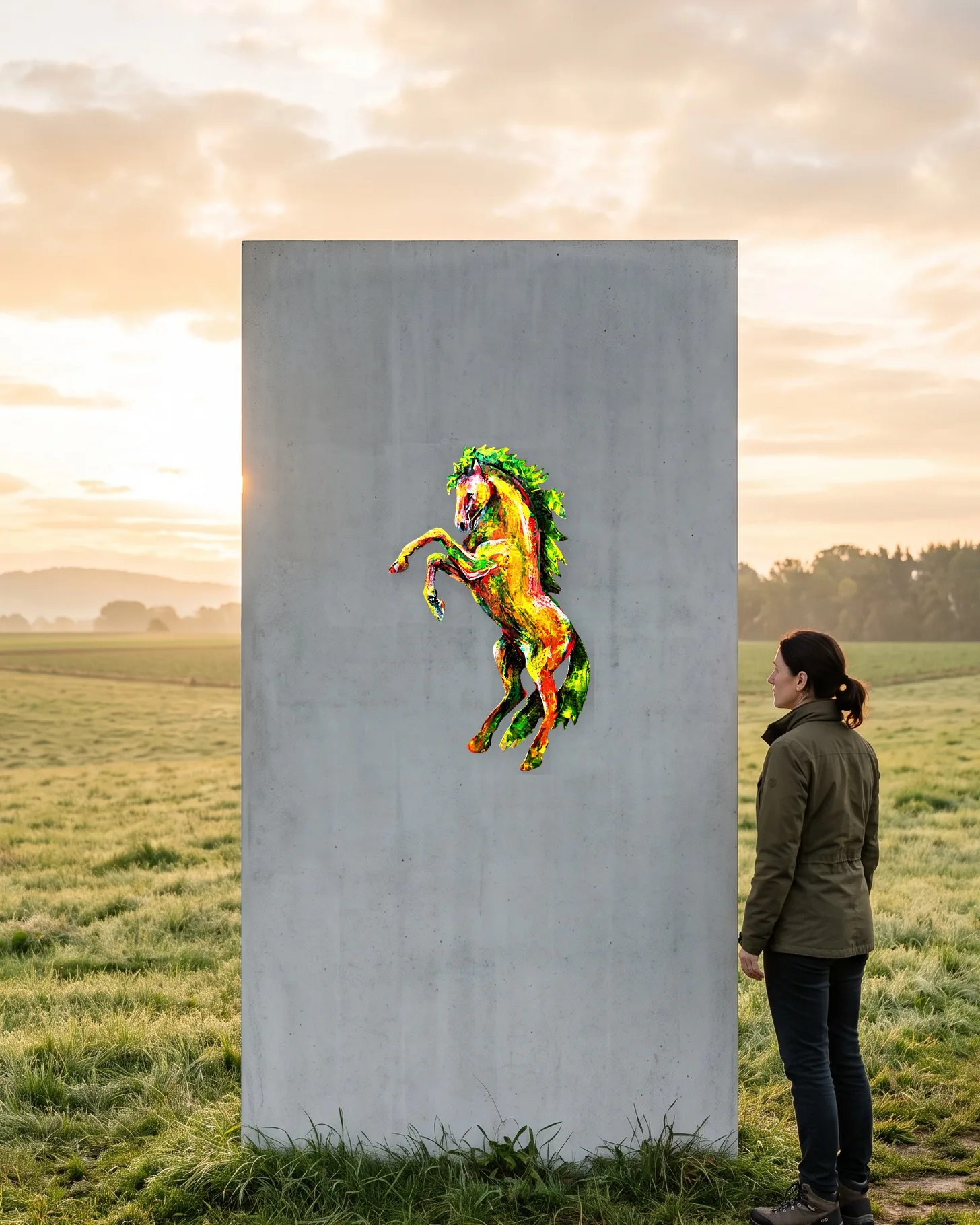
Palette knife painting with acrylics: Camille's technique on panel
February 28, 20263 min read
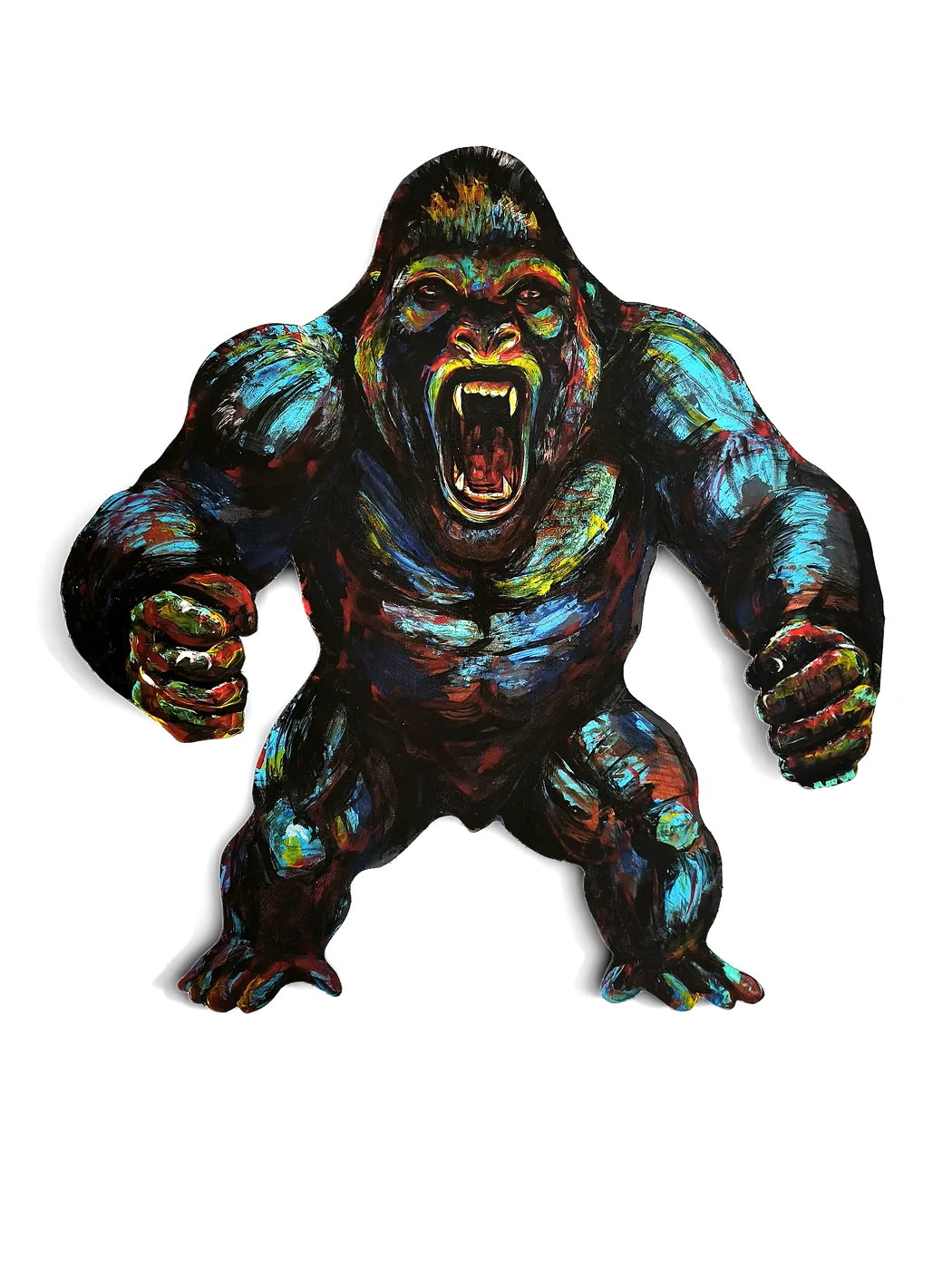
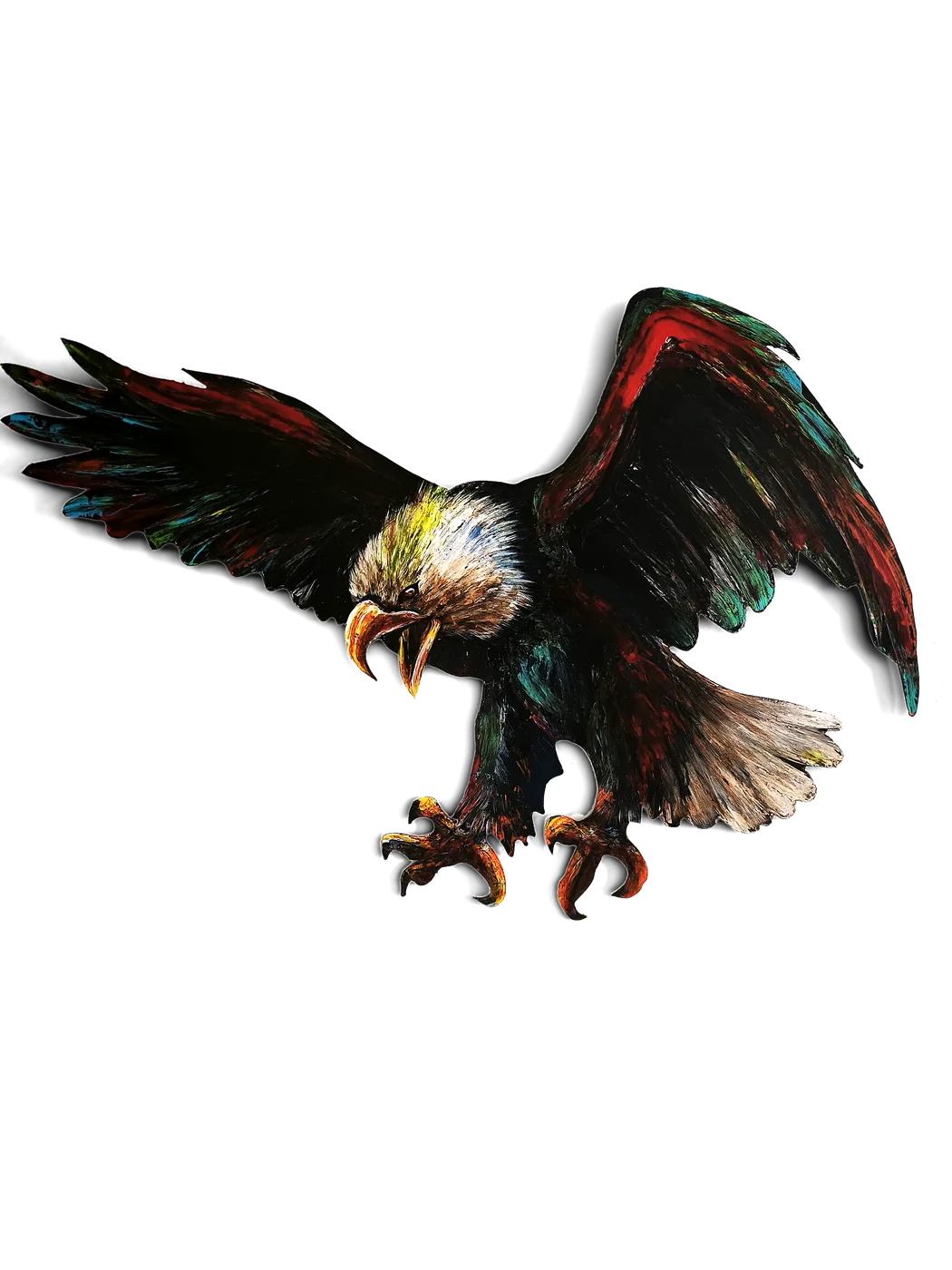
Painting with a palette knife in acrylic means laying colour on thickly with a blade instead of a brush. For her totems, Camille works on a rigid Isorel panel cut to the animal's silhouette: the paint does not sag, the relief stays put, and raking light picks out every gesture.
No brush: the painting knife
Apart from the Gentlemen portraits, Camille's works are made in acrylic with a knife, no brush. The blade does more than spread paint: it lays it down, presses, drags, and colours mix directly on the panel. That is where the thick, vibrant textures come from, the ones you recognise up close.
Two tools are often confused, and both are commonly called palette knives: the palette knife proper, straight and rigid, is mostly for mixing colours; the painting knife, with a cranked handle and a more flexible blade, applies paint to the surface. The second one does the work here.
A rigid panel, cut to the silhouette
The support is Isorel, a fibreboard known as masonite outside France. It does not flex under the paint, so the relief stays intact over time. Pollock, Miró and Frida Kahlo also painted on this kind of panel. Camille prepares it with a special ground so the knife can glide and grip at the same time.
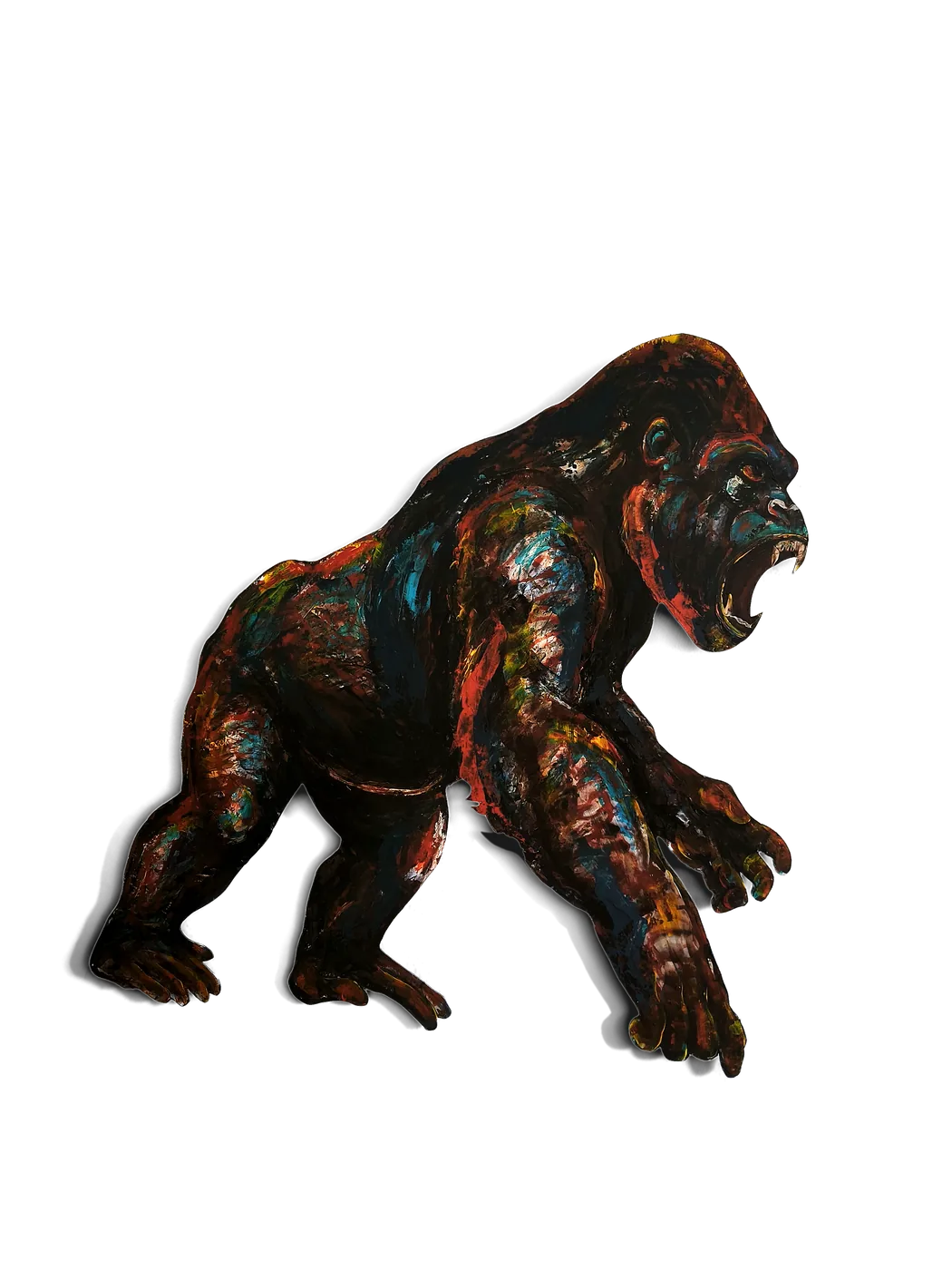
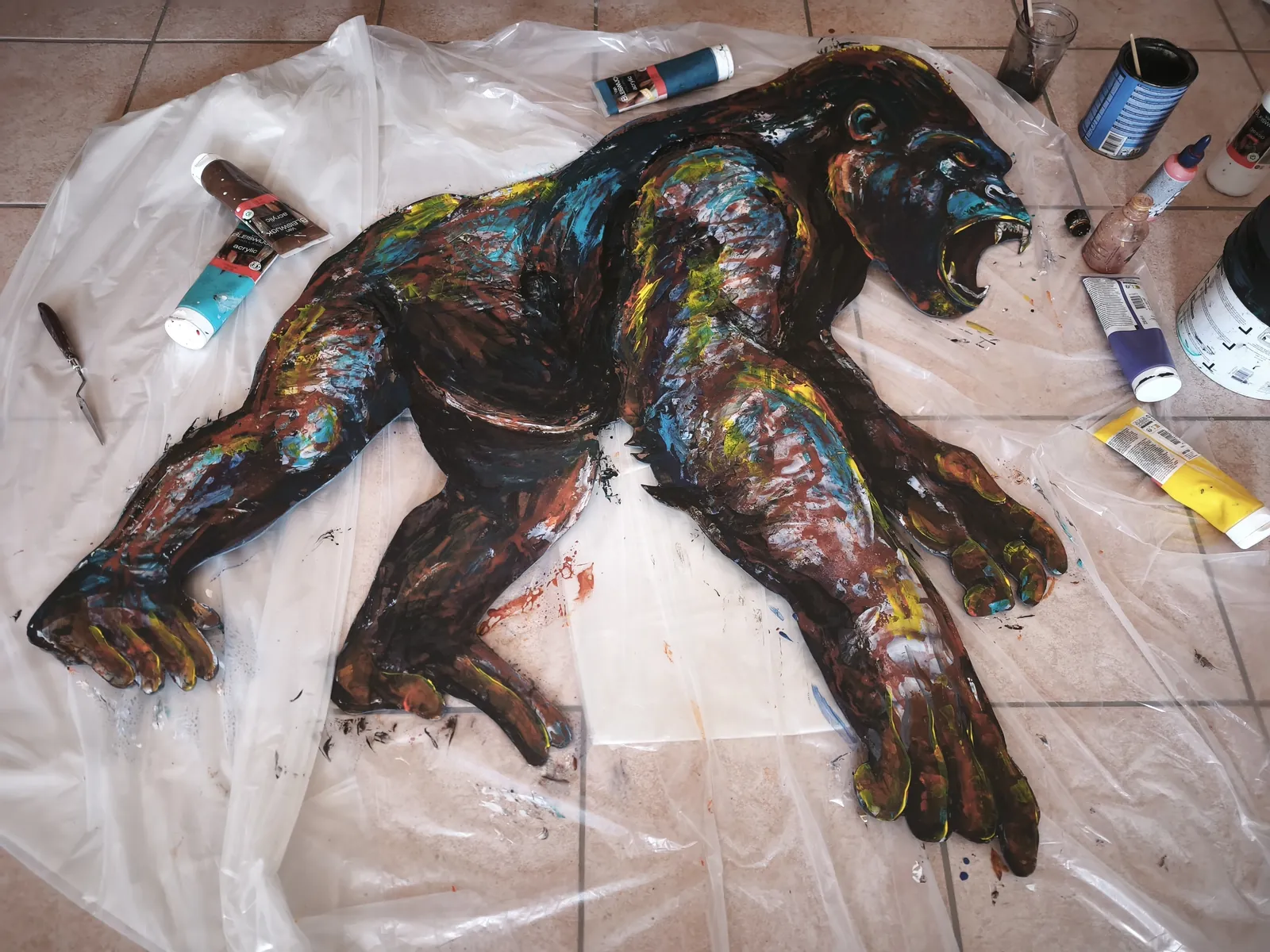
The panel is cut to the animal's silhouette, which gives the work the look of a wall relief. In the studio photo at the top of this article, it lies flat on a plastic sheet, surrounded by tubes of acrylic, with a knife off to one side.
The gesture: no going back
Camille composes her palette before starting, always generous, always warm. The knife replaces the brush. Each deposit of paint is unrepeatable, and the impastos layer up. That is what gives the works their raw energy and their one-of-a-kind character.
If you are starting out, take two principles from this practice: prepare more colour than seems necessary, and accept layering over reworking.
How acrylic dries when it is thick
The thicker the paint, the longer the wait. For Camille's works, each piece needs significant drying time because of the generous impasto, and that is one of the factors, along with panel size, that set the lead time of a commission. No per-layer duration is given here: it depends on thickness. Works shown as available in the gallery are already painted and dry.
Relief that catches the light
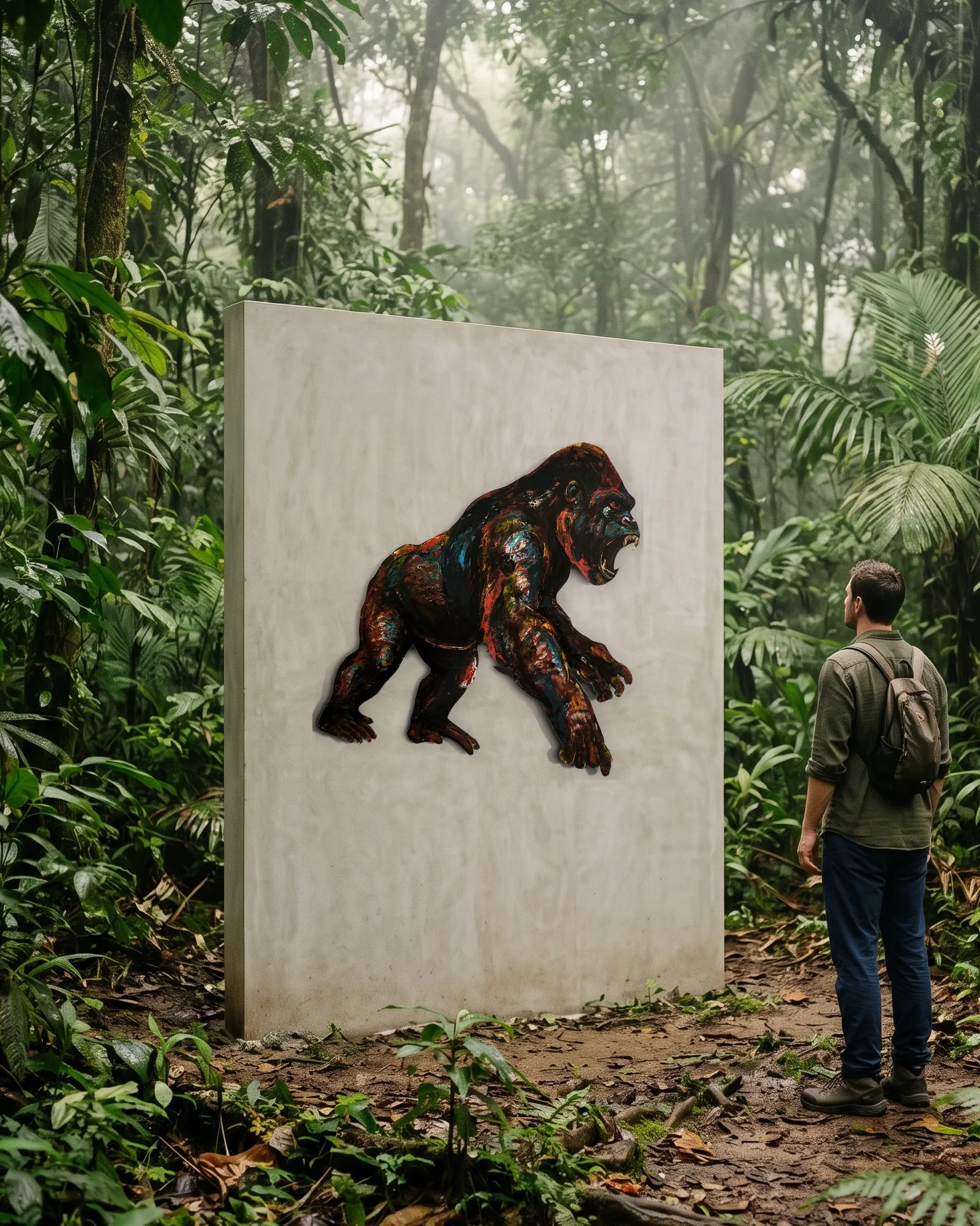
Impasto forms ridges and hollows. Lit from the side, they cast shadow and make the colour play as it would on a sculpture, which a print cannot reproduce. Three pages show it well: Le Sage, a wall relief in iridescent blues; Le Veilleur, an eagle where every feather is a knife stroke; Le Conquérant, the striding gorilla from the studio photo.
A little history
The knife is not an invention of contemporary art. Gustave Courbet was already using it to lay on and scrape off the paint of his landscapes, far from the academic conventions of his day. Camille carries that gesture into acrylic, on a cut panel.
Going further
Les Colosses brings together gorillas whose impasto comes alive under raking light. For the panel preparation, the palette and the signature, step by step, read In the Totem Sauvage studio.
Each work is signed on the back, numbered 1/1 and comes with a certificate of authenticity; no reproduction is made.