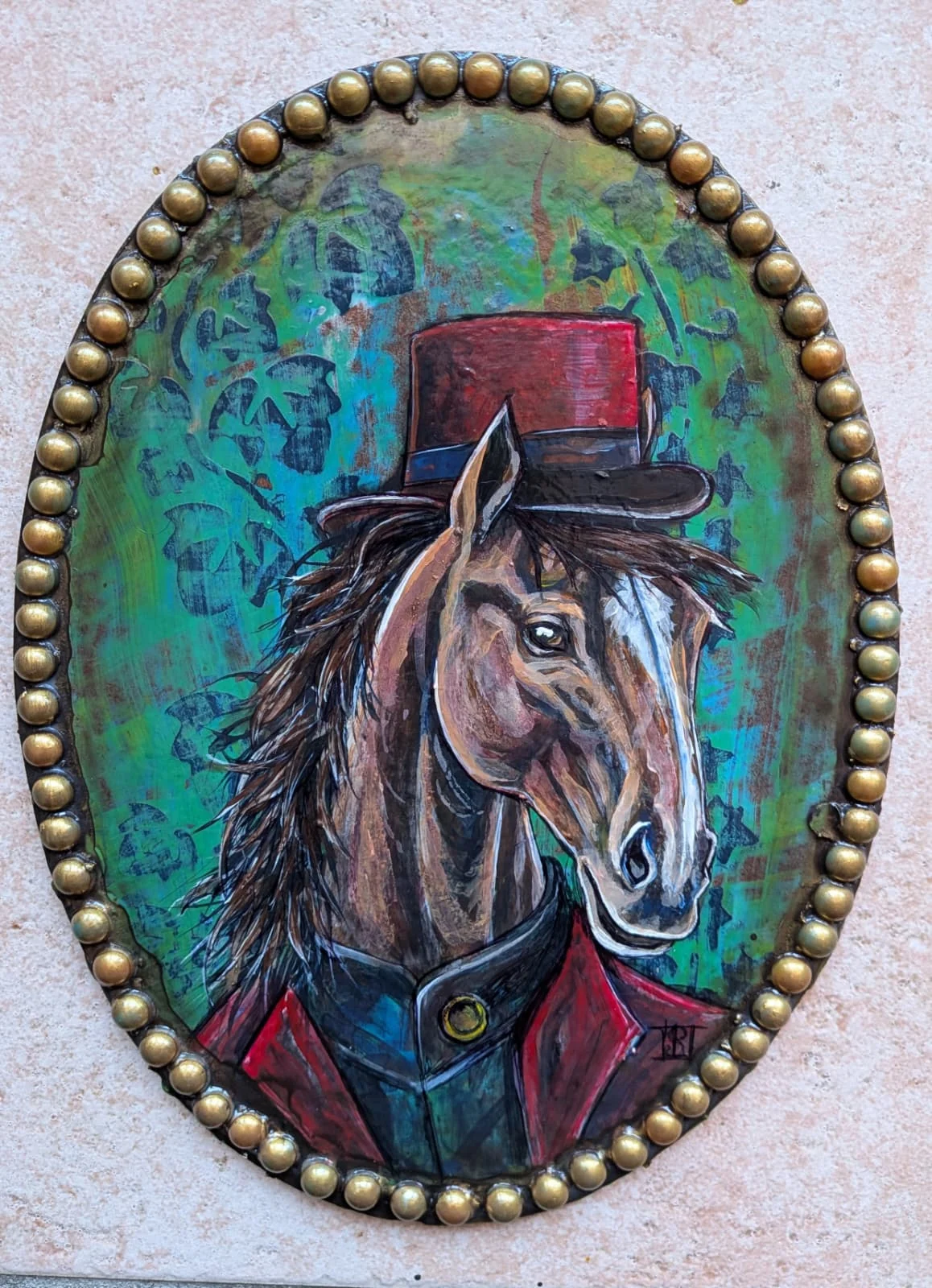
The horse in art: from prehistory to the present day
January 30, 20262 min read

Among all the animals represented in the history of art, the horse occupies an absolutely singular place. From the rocky walls of prehistoric caves to contemporary galleries, its image has never ceased to fascinate.
The horse in prehistoric art
In the caves of Lascaux (17,000 years ago), Chauvet (36,000 years) and Pech-Merle (25,000 years), the horse is everywhere. Across cave art as a whole, it is the most represented animal, even if at Chauvet lions, mammoths and rhinoceroses outnumber it. Why this obsession?
Antiquity: the horse as a symbol of power
Pegasus, Bucephalus (Alexander's horse): horses have proper names, which is rare in animal iconography.
The Renaissance and equestrian masters
Leonardo da Vinci devoted entire notebooks to the anatomical study of the horse. Uccello, Titian, Velázquez painted equestrian portraits that remain in history.
Contemporary animal art
Today, artists such as Camille choose the horse no longer as a symbol of power, but as the embodiment of a primitive energy and absolute freedom.
Discover Les Cavaliers: collection of unique pieces centred on the rearing horse.
Among the pieces available today: Le Solstice, an original equestrian painting with palette knife, L'Aérien, an original horse painting in acrylic with palette knife, and Le Flamboyant, a horse painting in acrylic with palette knife.