How to choose a painting for your living room: the complete guide
March 12, 20266 min read
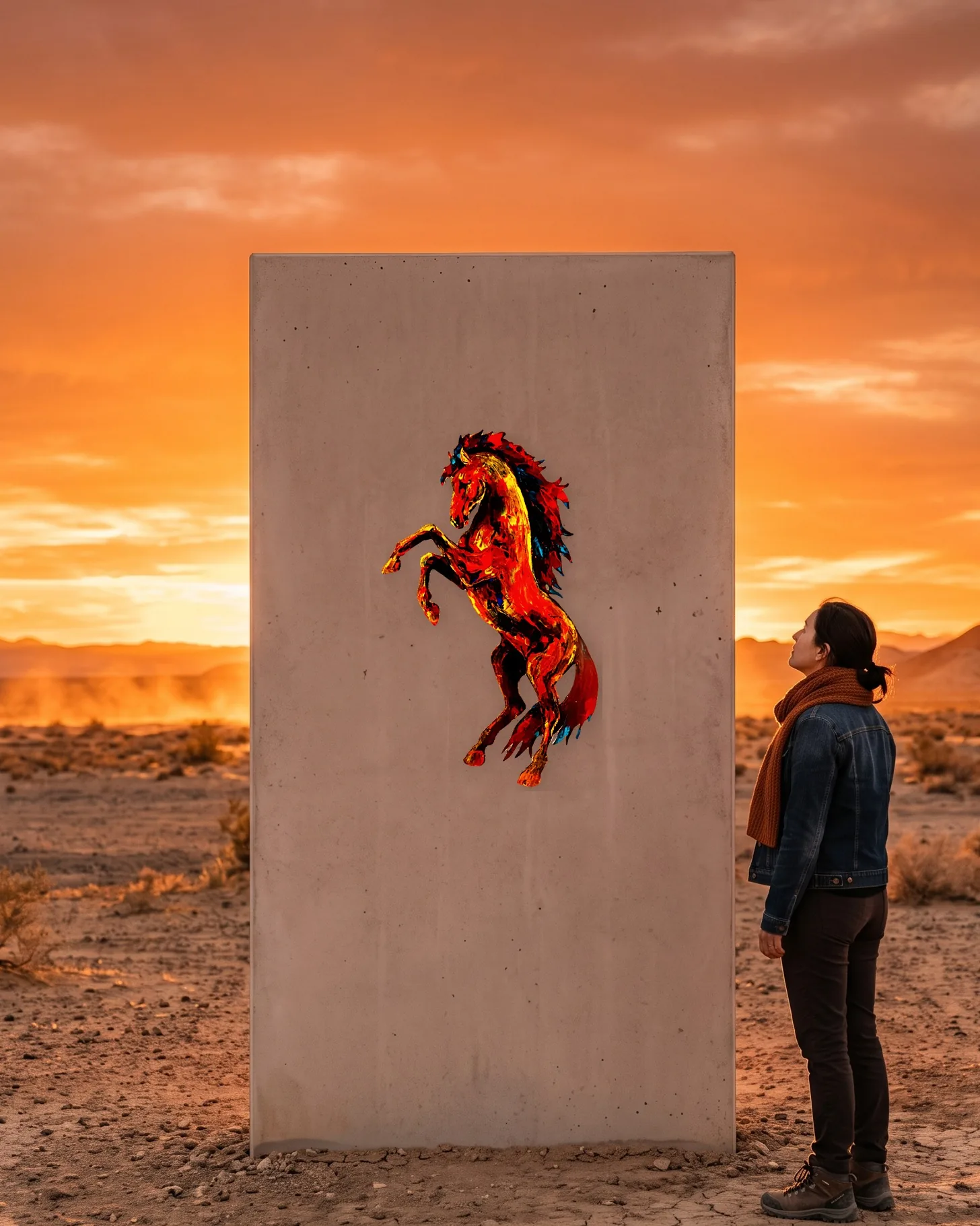
A living room without a painting is a face without expression. Wall decoration is what transforms a functional space into a place that resembles you, and a painting is its centrepiece. But faced with the immensity of choice, one question returns systematically: how to choose a painting for your living room without making a mistake?
1. Define the atmosphere you wish to create
Before looking for a painting, ask yourself a simple question: what emotion do you want to feel when you enter your living room?
This question is more important than the decorative style. The same Scandinavian living room can accommodate a minimalist photograph or a vibrant abstract canvas: the effect will be radically different.
The main atmosphere families
Serenity and softness. Soothing landscapes, pastel tones, light abstractions. The painting acts as a window onto calm.
Energy and character. Vivid colours, expressive gestures, powerful subjects. The painting becomes a focal point that catches the eye.
Discreet sophistication. Monochromes, black and white, art photography. The painting integrates without dominating.
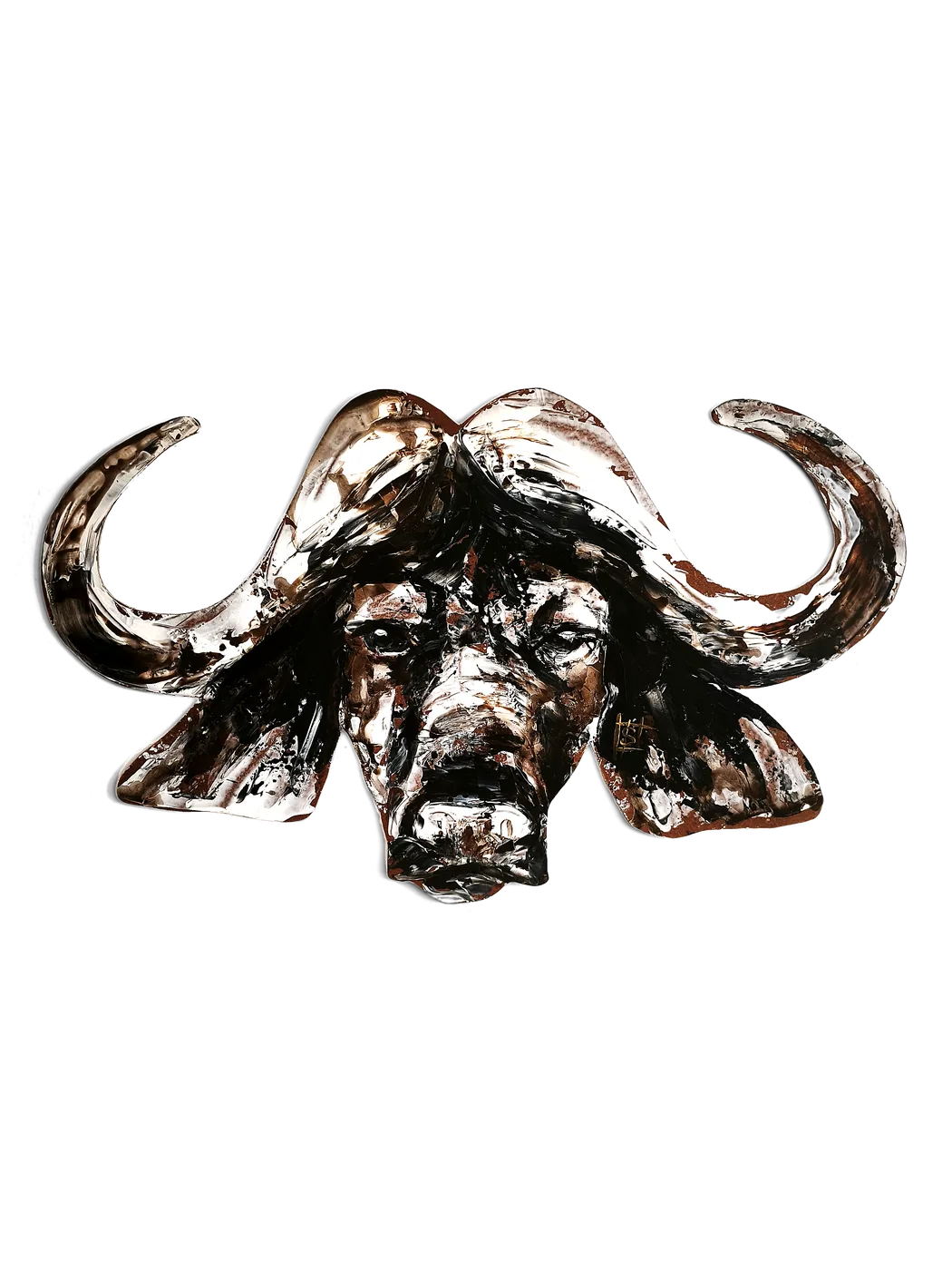
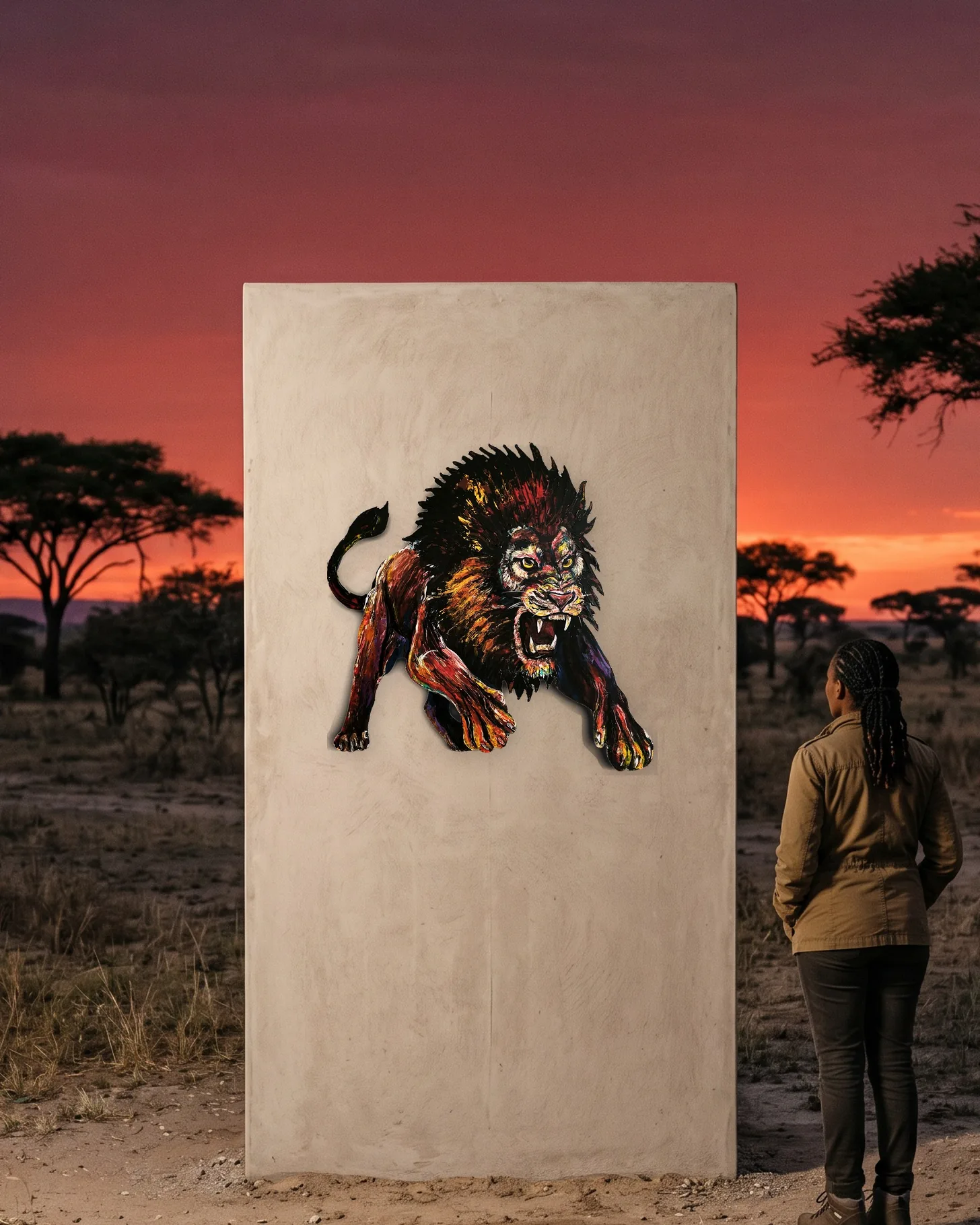
Nature and authenticity. Animal art, landscapes, raw materials. The painting creates a link with the living world.
2. The rules of dimensions
This is the most important technical point, and yet the most often neglected. A poorly sized painting is like a poorly proportioned piece of furniture: something feels wrong.
The two-thirds rule
For a painting above a sofa, the width of the work should represent approximately two thirds of the width of the furniture. Neither more nor less.
Centring height
The centre of the painting should be approximately 145-150 cm from the floor: the natural eye level. No lower, except in special cases.
3. Original vs reproduction
An original painting does not degrade like a printed reproduction. It carries the material, the texture, the gesture of the artist.
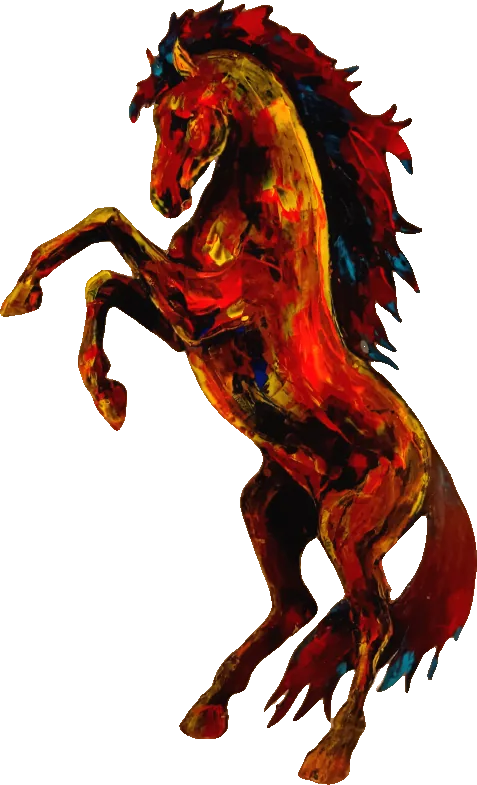
An original horse painting painted in acrylic with a palette knife, for example, offers a relief that no print can restore.
4. What size painting should you choose for your sofa?
Applying the two-thirds rule to the sizes actually in stock gives this:
- 140 cm sofa: aim for about 93 cm. A Souverain in 93 cm, or a Titan in 100 cm.
- 160 cm sofa: aim for about 107 cm. A Colosse in 106 cm, or a Sentinelle in 110 cm.
- 180 cm sofa: aim for about 120 cm. A Colosse in 118 cm, or a Sentinelle in 110 or 130 cm.
- 200 cm sofa: aim for about 133 cm. A Souverain in 135 cm, or a Sentinelle in 130 cm.
- 220 cm sofa: aim for about 147 cm. The Souverain in 135 cm, the widest format currently in the catalogue, falls short of the target but remains the best available choice.
One point specific to these pieces: the width to consider is the panel's widest point, since each piece is cut to the silhouette of the animal rather than to a rectangle.
5. Where to hang a painting when there is no sofa to dress?
A circulation wall, an angled wall, the space above a low sideboard call for the same reasoning applied to a different reference width: measure the available surface, aim for two thirds of its width, centre at 145-150 cm from the floor.
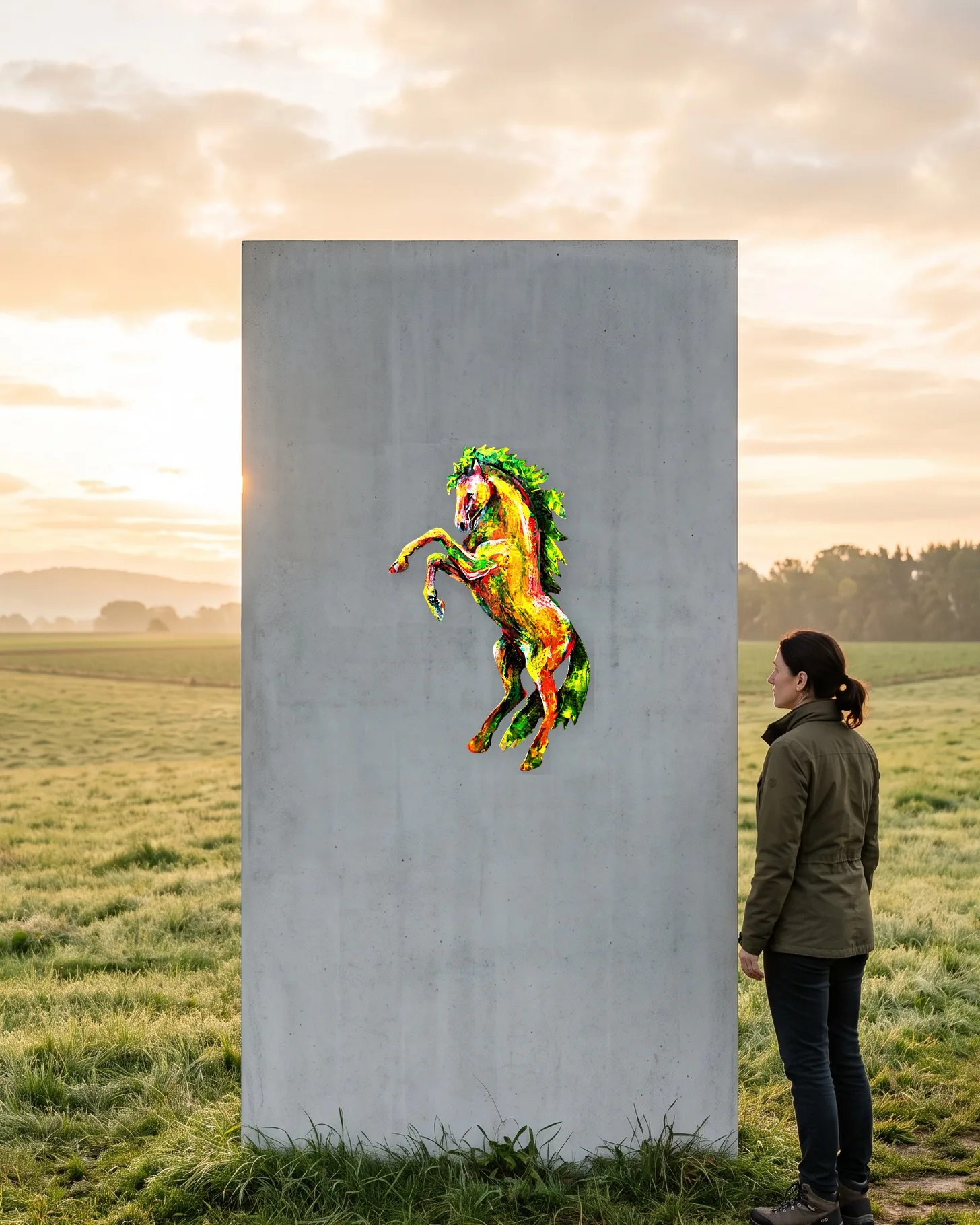
Orientation matters as much as size. Les Cavaliers in 60 x 102 cm, vertical, suit a narrow, tall wall, a stairwell, a hallway. Les Titans in 100 x 60 cm are the only horizontal format in the catalogue: they dress a low, wide wall, above a sideboard or a console, where a vertical format would overwhelm the space.
6. How to hang a painting without drilling in the wrong spot?
No frame, no glass: the painting is a rigid Isorel panel, cut to the silhouette of the animal, that does not flex under the thickness of the knife-applied paint. Without a frame's rectangle as a reference, the eye easily misjudges the true centring of the piece.
That is exactly what the augmented reality feature, present on every piece on the site, solves: it places the work at true scale on your own wall, from your phone, with nothing to install. You check the size, the height and the centring before drilling, which avoids the hole made in the wrong spot, the most common mistake with a large, frameless format.
7. How to light a knife-painted piece?
A knife painting reads differently from a smooth canvas: the thick paint casts small shadows that shift with the angle of the light. Front lighting flattens that relief; raking light brings it out.
On most artwork pages on the site, a raking light that you move yourself over the image reveals the real relief of the knife work, piece by piece. It is the best way to see what the paint will look like once hung, before deciding how to orient the piece relative to a window or a light source.
8. Which painting works in a bedroom?
A bedroom generally calls for a more discreet scale than a living room: less available wall width, a lower piece of furniture, an atmosphere meant to soothe rather than catch the eye the moment you walk in. Les Gardiens, small-format gorilla heads, from 40 x 60 to 50 x 58 cm, are sized for this scale, priced between 75 and 95 EUR.
The same two-thirds rule applies above a chest of drawers: a 75 cm piece of furniture calls for a width of about 50 cm, which a Gardien at 50 cm wide covers. Above a 90 cm chest, no Gardien reaches the width required and you need to move up a collection. Centring at 145-150 cm remains the reference, even in a more intimate room.
9. What if none of the catalogue's sizes fit?
Beyond a 220 cm sofa, the two-thirds rule calls for a width no piece currently in stock reaches: for 240 cm, the 160 cm target exceeds the Souverain at 135 cm, the largest format currently available.
This is exactly where a custom order serves better than a size compromise. Camille then paints a one-of-a-kind piece, cut to the silhouette like the others, starting at 90 EUR as an initial estimate, paid in full on ordering, for an indicative lead time of four to six weeks. Beyond 100 cm of silhouette cutting, the piece is quoted individually, delivery and installation included. See the custom order page.